//logicerror
//logicerror
//logicerror
unintended_behaviors {
yield
unexpected_results
}∆?

unintended_behaviors {
yield
unexpected_results
}∆?
latest
∆?
index
back to home
//parentheticals {
_you've found my stream of consciousness, my apologies.
_i currently recommend using desktop only, mobile is being optimized *jazz hands*
}∆? ▉
I've Written a Novel, or:
Father John Misty and the Destructive Outside Perspective on Self-Important Publishings.
Dec 5, 2025
And I’m writing a novel
Because it’s never been done before.
While I love that song and those lyrics specifically (likely because they invoke some sort of an I am too and it’ll truly be something else! response), I’m not doing anything groundbreaking here, I haven’t written anything that will shake the foundations of the literary world. I typed out a long string of words out into what could — hopefully — be taken as a cohesive story, then left those words alone for some time to sit and more or less ferment in some weird way.
As I was writing the story, forming it into what could now be considered a first draft, after uncountable — because I don't have enough fingers — hours of tinkering and story-boarding on Amazon purchased whiteboards that now decorate my office’s (bedroom, let’s be honest) walls, I would talk about the act of writing with friends and anyone who made the mistake of asking what have you been up to lately, E.F.?
“…And I’m writing a novel.”
I often find that there’s only one response that gets thrown my way when those words leave my lips: Oh wow, that’s so cool! What’s it about? Another colloquialism, word, or phrase can be swapped in lieu of cool.
Alright, so now that their portion of our conversational social contract is complete I normally would respond with some ham-fisted explanation of the story as I stumble through my thoughts because I write for a reason, dammit. This poorly articulated journey through the novel is the sole cause of twisted expressions, concerned head nods, and the classic mhmmms of those who are now regretting their politeness — yet, they will ask again, and so will the next guy, your neighbor, your friends and their friends, your grandmother whom you would rather not hand a copy of your ramblings to, the list goes on and the questions won’t stop. You are, remember, totally doing something that’s never been done before.
I think what I’m really trying to convey here can be reduced down into one shockingly simple idea, or perhaps it’s a tactic, a piece of advice:
Stop telling people.
Don’t get me wrong though, it is a wonderful thing to share something that has been toiled over and hyper-analyzed while staring at the ceiling during sleepless nights. Recently, I mailed a copy to the other side of the country, put it in the hands of a friend who would do nothing if not give their unfettered thoughts of my work. That was a huge step personally, as this person was the first to read my long form attempts.
Will they think it’s dogshit? What if it is? It definitely is. I wonder if I could catch the package before it hits the streets, intercept it.
Questions like that are pretty damning, they rip to the core and tear at your grey matter effectively stopping you from submitting your work for any version of review or critique and leaving you with a stack of finished projects that haven’t felt the judgmental gaze of a reader. I do find them to be important questions, however. Answering those questions yourself through some hefty introspection, or simply having someone else answer them for you, is one of the most important steps on the way to improvement.
Getting back to the main idea here — stop telling people. More pointedly, stop telling people until you are ready to share because (here’s where the Destructive Outside Perspective part comes in) holy shit, people will beat you down.
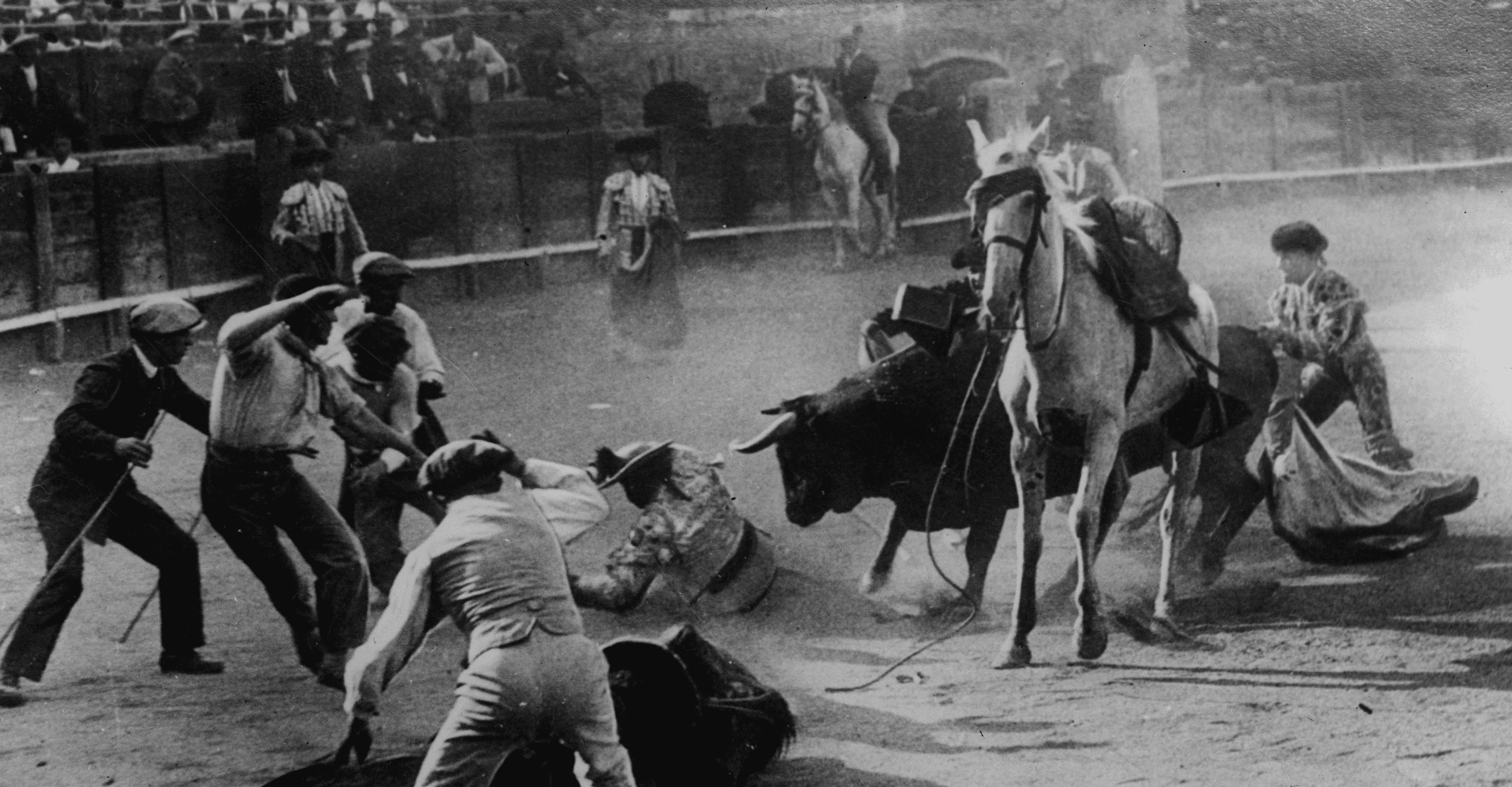
Consider the horse — the horse is alive and well, galloping through fabled scenes of tall grass and golden stalks of wheat and grain, its muscles rippling under the soft surface of its hide. The horse in the field encounters someone, someone who asks a question of the animal, a question concerning a horse-related idea that is time-dependent (I don’t know, hoof maintenance, stick with me, I beg of you [the horse also speaks English]). Time-dependent as in time spent cleaning the hoof, honing the skill necessary to do hoof maintenance solo, so on so forth. But after asking the horse how his or her skill is progressing regarding said hoof-work for the first time, the passerby’s line of questioning has just become time-dependent as well. Now, each time the horse and the passerby meet, the person must (and I mean MUST) ask the horse how their work is coming along to the point where the horse realizes they would no longer like to maintain the hooves. No matter how much time has passed between each line of questioning (hours, perhaps, depending on the inquirer’s capacity for memory) they will continue to ask, and you can bet some (ir)responsible amount of money on that fact and win each time. The horse is questioned over and over, until the horse ultimately and unfortunately passes away, leaving their body to lie in the windswept field alone with their unfinished project. That is until the passerby arrives once again — how are the hooves? they ask the no longer animated horse. Still working hard? The horse doesn’t respond, it no longer has the capacity to vibrate vocal chords at the correct frequency to conjure up a response. Again, again, again, more questions, this time the passerby has brought friends — passersby. I heard you were perfecting the skill of hoof-work, tell me all about it would you? They are effectively beating a dead horse. Did I need to say that explicitly? Likely not, but I wanted to drive it home, beat this analogy into submission.
Now, getting to the Self-Important Publishings part. I said Self-Important for a specific reason as it relates to the whole stop telling people thing, because there is a slight distinction to be made semantically — I think writers and many other creatives get caught up with figuring the difference between self-important and self important, perhaps the latter is better stylized as important to the self, i.e. cathartic or mentally freeing while the former could be seen more as arrogance at work. Your work, like ol’ Father John was alluding to, is that what you're doing has been done before, it is currently being done by others, and it will be done in the future. (Parenthetical thought — you’re a writer, there are so many of us out there, what you're doing has been done but it’s up to you to put a spin on it, lend your personality to the words, borrow from others even and attempt to place them on the page as well). I for one have struggled with the desire to let the ego out for an occasional spin, causing me to feel a bit self-important with my work, tempting me to share with the passersby — I did just to be clear — and that lead me to writing this piece here, for you. I definitely did this for you, this was not some sort of note-to-self or cathartic release, no not in the slightest. Foolish.
Your work is important. Baby it, nurture it, work it like a dough after a few dozen minutes of rest, shape it into whatever you want — just don’t mistake the personal importance of the text for self-important ideations saying the world needs to know about what you’re working on. Keep it tight, share when you're ready, tell the passerby you are cultivating a healthy cadre of garden snails (feel free to use that) before you decide to talk about your novel.
I have works I’d like to share, but now is not the time. Soon, maybe.
Thank you for your time. Love you.